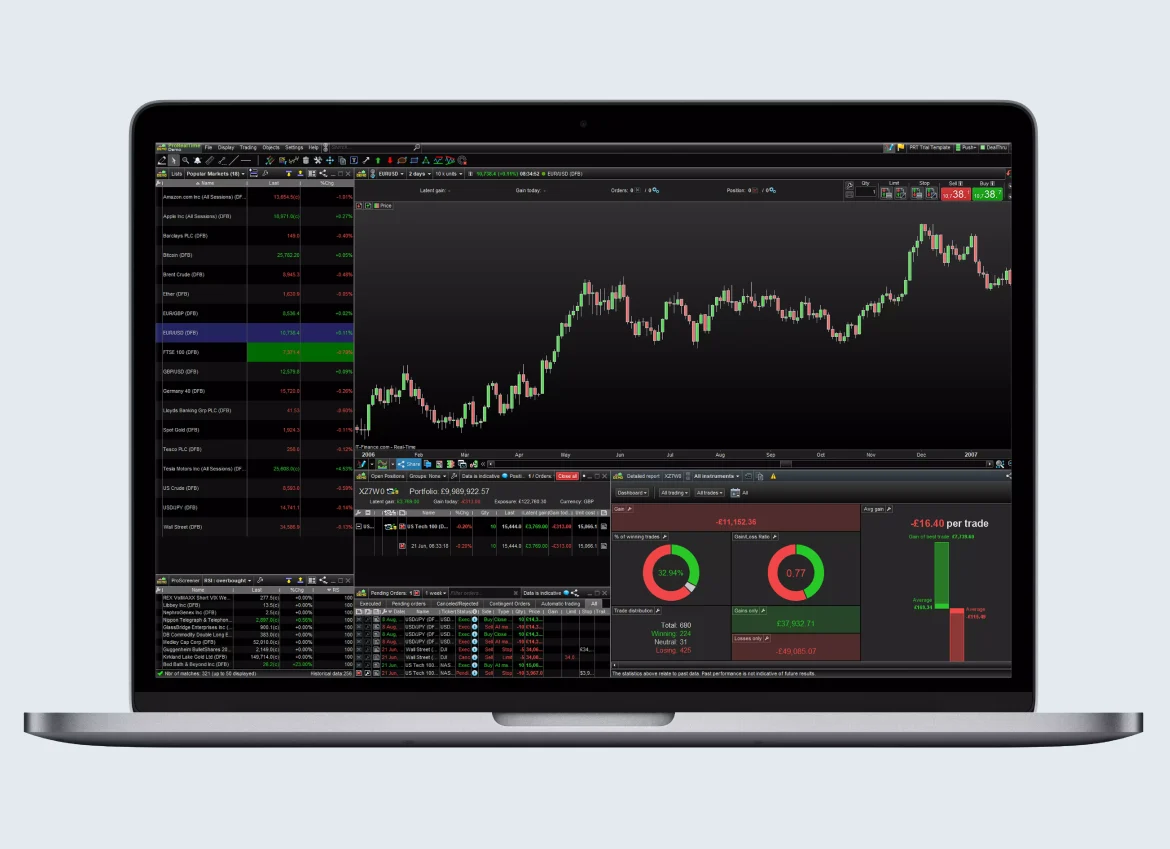
For years, the world of algorithmic and quantitative trading felt like a private club. You know, the kind with velvet ropes and billion-dollar hedge fund members only. But that’s changing—fast. Today, individual investors have access to tools and platforms that can turn complex math into actionable, even automated, strategies.
Let’s be clear: this isn’t about becoming a Wall Street quant overnight. It’s about borrowing their mindset. Using data, rules, and a bit of automation to remove emotion, save time, and potentially find edges the human eye might miss. Honestly, it’s less about predicting the future and more about systematically managing probability.
What Exactly Are We Talking About Here?
First, a quick sense-check. Algorithmic trading simply means using a computer program that follows a defined set of instructions (an algorithm) to place a trade. The goal? To achieve speed and precision that’s impossible for a human manually clicking buttons.
Quantitative trading is the broader brainpower behind it. It’s a research-driven approach that uses mathematical and statistical models to identify trading opportunities. It asks questions like: “When this pattern in the moving averages occurs, and the RSI is below 30, what has happened next, statistically, over the last 5 years?”
For you, the individual trader, these strategies often blend. You’re using quantitative research to build a rules-based, algorithmic system. The best part? You don’t need a supercomputer in your basement to start.
Foundational Strategies You Can Actually Implement
Okay, let’s get practical. Here are a few core quantitative trading strategies that are accessible for dedicated retail investors. Think of these as starting points, not plug-and-play solutions—each requires your own testing and tuning.
1. Trend Following & Mean Reversion
These are the classic yin and yang. Trend following assumes a stock moving up will continue up (and vice versa). Mean reversion bets that prices will, well, revert back to their historical average. A simple algorithmic take?
- Trend Strategy: Program a bot to buy when a short-term moving average (like the 50-day) crosses above a long-term one (like the 200-day)—the classic “golden cross.”
- Mean Reversion Strategy: Code a system to short a stock when its price moves 2 standard deviations above its 20-day average, expecting a pullback.
2. Statistical Arbitrage
This sounds fancy, but the concept is relatable. It’s like noticing that two siblings, Stock A and Stock B, usually walk hand-in-hand. If they suddenly get far apart, you bet they’ll come back together. In practice, you’d use a model to find historically correlated assets. When the spread between their prices widens abnormally, you short the outperformer and buy the underperformer algorithmically.
3. Sentiment Analysis Scraping
Here’s a modern, data-heavy approach. You can write or use a script to quantify market sentiment. Scrape news headlines, social media mentions, or even SEC filing language. Score the text as positive or negative. Your algorithm could trigger a trade when sentiment hits an extreme, maybe selling when the hype on social media peaks. It’s a way to gauge the market’s mood—at scale.
The Toolkit: What You’ll Need to Get Started
You can’t build a house without tools. For quant and algo trading, your toolkit has three main parts:
| Tool Category | Examples & Options | Why It Matters |
| Data & Research | Broker APIs, Yahoo Finance, Polygon, QuantConnect data | Clean, reliable data is the fuel. Garbage in, garbage out, as they say. |
| Strategy Development | Python (Pandas, NumPy), R, backtesting libraries like Backtrader | This is your workshop. Here you code, test, and refine your logic. |
| Execution Platform | Interactive Brokers API, Alpaca, TD Ameritrade, retail-friendly platforms like TradeStation | This connects your brilliant algorithm to the real market to place trades. |
Honestly, the biggest shift isn’t technical—it’s psychological. You move from “I think this stock will go up” to “My model, based on these ten criteria, signals a 65% probability of a 5% rise within two weeks.” It’s a different way of thinking.
The Inevitable Hurdles (And How to Jump Them)
It’s not all smooth sailing. Here are the real pain points for individual investors diving into quantitative trading strategies.
- Overfitting: The cardinal sin. This is when you curve-fit your model to past data so perfectly it’s useless for the future. It’s like teaching a dog to perform a trick only in your living room with the lights dim. Avoid it by testing on out-of-sample data and keeping strategies logically simple.
- Technology Costs & Latency: You’re not competing with high-frequency traders on speed. Don’t try. Focus on slower, daily or weekly strategies where a millisecond delay doesn’t matter.
- Psychological Drift: Even with a system, you might be tempted to override it during a market panic or frenzy. The whole point is to avoid this! Trust the process you built in calm times.
A Realistic Path Forward
So where do you begin? Well, start small. I mean, really small.
- Learn the Basics of Python. You don’t need to be a master. Just enough to handle data and logic. It’s the lingua franca of this space.
- Paper Trade a Simple Idea. Take a single indicator-based strategy. Code it. Backtest it on years of data. Then run it in real-time with fake money for months.
- Deploy with Minimal Capital. When you’re confident, fund an account with money you can afford to lose. Let the algorithm run. The goal is to test the entire pipeline—code, brokerage, execution—not to get rich quick.
- Review and Iterate. Analyze the trades. Did it work as backtests suggested? Why or why not? Tweak. Refine. Or scrap it and try a new idea.
That said, the landscape is always shifting. Current trends like the rise of alternative data (satellite imagery, credit card transactions) and machine learning for retail traders are pushing the boundary of what’s possible. But the core principle remains: systematic discipline over gut feeling.
The real promise of algorithmic and quantitative trading for someone like you isn’t a money-printing machine. It’s the framework. It forces clarity, demands evidence, and automates discipline. In a market driven increasingly by algorithms, having even a small, systematic understanding of how they work might just be the most valuable investment you make.