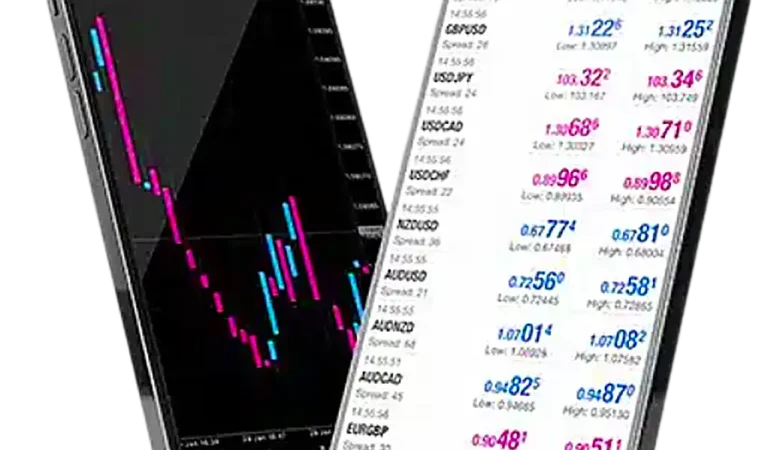
Let’s be real for a second. You’ve probably done it. Opened your banking app at 2 AM, checked your portfolio, and felt a jolt of panic—or euphoria. Then you made a move. Maybe you sold something. Maybe you bought more. And later, you wondered… why did I do that?
Well, the answer isn’t just “bad luck.” It’s your brain. Honestly, our minds are wired with shortcuts—biases—that served us well on the savanna but kinda mess with us when we’re staring at a glowing screen full of numbers. Digital banking and investment apps, designed to be slick and frictionless, actually amplify these biases. Here’s the deal: understanding them is your best weapon.
The Frictionless Trap: How Apps Weaponize Your Impulses
Think about it. Old-school investing meant calling a broker. There was friction. Time to think. Now? You tap, swipe, confirm with a fingerprint. It’s like shopping for groceries but with your retirement fund. Apps are built for speed—and that speed feeds our behavioral blind spots.
Confirmation Bias: The Echo Chamber in Your Pocket
You know that feeling when you buy a stock, and suddenly every news article seems to confirm it’s a genius move? That’s confirmation bias. Your brain actively seeks out information that supports your decision and ignores the red flags.
Digital apps make this worse. They serve you personalized news feeds, charts you can customize, and alerts that highlight gains. You’re not getting balanced info—you’re getting a highlight reel of your own beliefs. You might scroll past a warning about a company’s debt because, well, the chart looks bullish. And the app? It’s happy to let you.
Key takeaway: If you only read news that makes you feel smart about your trades, you’re not investing—you’re just validating yourself.
Loss Aversion: Why a $50 Loss Hurts More Than a $50 Gain Feels Good
Here’s a weird quirk of human psychology: losing hurts roughly twice as much as winning feels good. This is loss aversion. In digital banking, it shows up as panic selling. You see a dip—maybe 5%—and your brain screams, “Get out!” You sell. Then the stock rebounds. Ouch.
Apps exploit this with push notifications. “Portfolio down 3% today.” That little buzz is designed to make you react. And because selling is now one swipe away, you’re more likely to lock in a loss. The app doesn’t care about your long-term plan—it cares about your engagement.
Quick stat: Studies show that investors check their portfolios more frequently when using apps, and that frequency increases selling during downturns. It’s a vicious cycle.
Overconfidence and the “I Got This” Illusion
Let’s talk about overconfidence bias. It’s that little voice that says, “I’m smarter than the market.” And sure, maybe you are—sometimes. But digital apps make you feel like a pro. You get charts, technical indicators, even AI-driven suggestions. It’s easy to confuse having tools with having skill.
I remember a friend—let’s call him Dave—who downloaded a trading app and made three winning trades in a row. He thought he was a genius. He started day-trading during lunch breaks. Then he lost 40% in a week. The app didn’t warn him. It just showed him his balance, red and blinking.
Overconfidence is amplified by the gamification of these apps. Confetti animations for a trade? Leaderboards? It’s all designed to make you feel like you’re winning—until you’re not.
Anchoring: Stuck on That First Number
Anchoring is when you fixate on a specific price point. Maybe you bought a stock at $100. It drops to $80. You refuse to sell because you’re “waiting for it to get back to $100.” Meanwhile, the company’s fundamentals have tanked. You’re anchored to a number that no longer matters.
Digital apps make anchoring worse with price alerts and historical charts. You see that $100 mark highlighted. It becomes a mental magnet. You hold on, hoping, while the app quietly updates your losses. It’s like staring at a broken compass—you know it’s wrong, but you can’t look away.
The Herd Mentality: Everyone’s Doing It (So It Must Be Right)
Social trading features are all the rage now. You can see what others are buying, follow “top investors,” even copy their trades. Sounds helpful, right? Well, it feeds the herd mentality bias. When everyone piles into a meme stock or a crypto craze, you feel left out. FOMO kicks in.
Apps show you trending assets, popular portfolios, and real-time activity. It’s a digital crowd. And crowds, historically, are wrong at the worst moments. Remember GameStop? Some people made bank. Many more bought at the peak and got crushed. The app didn’t tell you that the herd was about to stampede off a cliff.
Here’s the thing: Just because a trade is popular doesn’t mean it’s smart. Sometimes the herd is just a bunch of people making the same mistake.
Recency Bias: What Happened Five Minutes Ago Feels Eternal
Recency bias is when you give too much weight to recent events. A bad week makes you think the market is crashing. A good month makes you think you’re invincible. Digital apps, with their real-time updates, supercharge this. You see the last five trades, the last hour’s volatility, and you assume that’s the new normal.
It’s like driving through a tunnel and thinking the whole world is dark. But the tunnel ends. The market has a long memory—your app’s feed doesn’t.
How to Fight Back (Without Deleting the App)
Okay, so the apps are designed to exploit you. But you’re not helpless. Here are a few strategies that actually work—no willpower required.
- Turn off push notifications. Seriously. That little red dot is a trigger. Disable it for price alerts, news updates, and portfolio changes. Check your investments once a day, or even once a week.
- Set rules before you trade. Write down your entry and exit points. Use limit orders. Don’t let emotion decide when you buy or sell—let your pre-set plan do it.
- Use the app’s “cool-off” feature. Some apps now let you delay trades by 24 hours. Enable it. It’s like putting a lock on the fridge when you’re on a diet.
- Diversify automatically. Use robo-advisors or preset portfolios. You don’t have to think about it. The less you tinker, the less your biases can mess with you.
- Track your decisions. Keep a simple journal in the app’s notes or a separate doc. Write down why you made a trade. Then review it a month later. You’ll see patterns—and cringe.
The Bottom Line: You’re Human, and That’s Okay
Here’s the truth: your brain isn’t broken. These biases are part of being human. But digital banking and investment apps are designed to exploit them for engagement and profit. They’re not your enemy—but they’re not your friend either. They’re tools. And like any tool, they can be used wisely or recklessly.
The next time you feel that urge to check your portfolio at 3 AM, pause. Take a breath. Ask yourself: “Is this a decision, or is this a bias?” The answer might save you a lot of money—and a lot of regret.
Because in the end, the best investment you can make isn’t in a stock or a coin. It’s in understanding how your own mind works. That’s a return that never depreciates.